
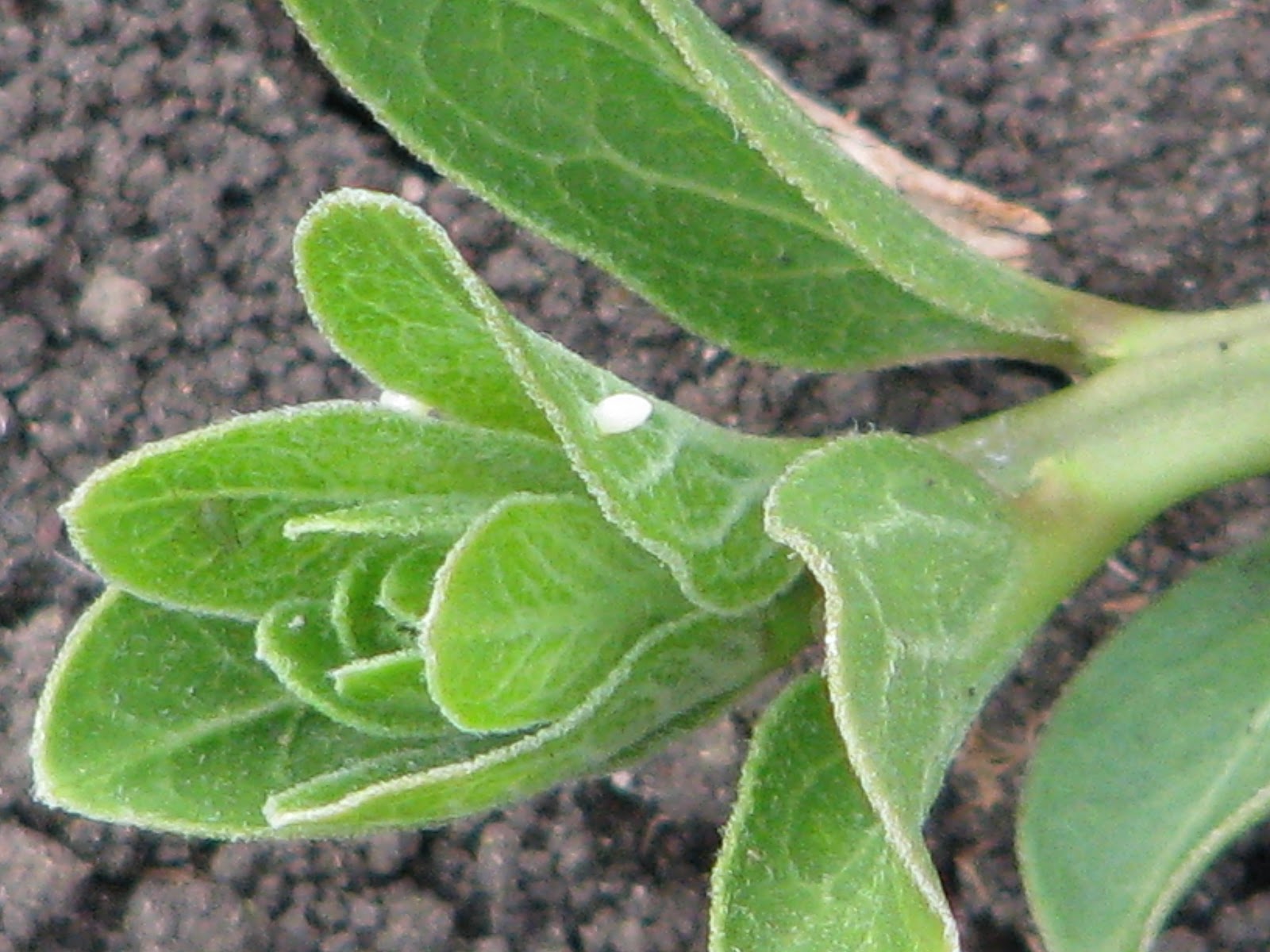
I first noticed this plant about four years ago. It was in a location that did not get sun until afternoon. Lack of morning sun is probably the reason it never bloomed. Last week, I decided to move the plant to a sunny location to give it a better chance. Milkweeds have a deep taproot and I got about 10 inches of this plant’s root. I must have got enough of the root because the stems and leaves have grown since the plant was moved. I will just have to wait until it blooms to know what kind of milkweed this is.

The monarch also laid eggs on this green milkweed, Asclepias viridis. I transplanted several of these green milkweed plants from the backyard prairie to the front yard prairie a few weeks ago so all of them would not be concentrated in one area of my property.

The monarch did not lay any eggs on the milkweed or the mystery plants in the backyard prairie. Maybe she or another monarch will lay eggs in the backyard and help to identify the mystery plant.
I am looking forward to watching these guys grow since I do not usually get monarch caterpillars in my garden. I hope the milkweed's growth stays ahead of the caterpillars'.


