Saturday, March 26, 2011

Monarch Caterpillar Eggs on the Prairie

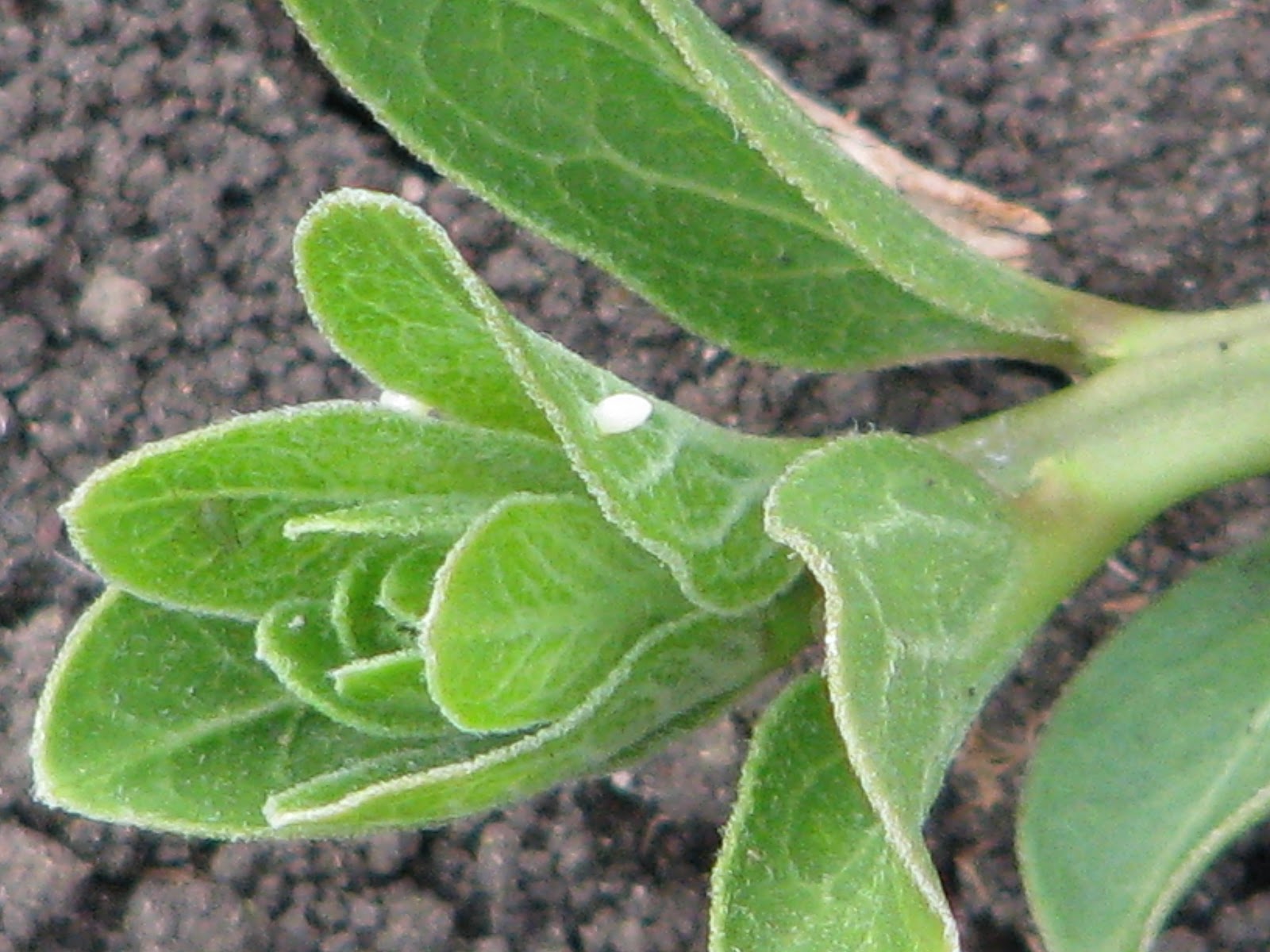
While the identity of my mystery plant is still in question, a haggard monarch butterfly, who requested her photo not be published, flew around the prairie depositing eggs on the milkweed plants.


The plant pictured above is another volunteer that I suspected was a milkweed. The monarch must agree with my assessment since she laid a few eggs on the leaves.


I first noticed this plant about four years ago. It was in a location that did not get sun until afternoon. Lack of morning sun is probably the reason it never bloomed. Last week, I decided to move the plant to a sunny location to give it a better chance. Milkweeds have a deep taproot and I got about 10 inches of this plant’s root. I must have got enough of the root because the stems and leaves have grown since the plant was moved. I will just have to wait until it blooms to know what kind of milkweed this is.


The monarch also laid eggs on this green milkweed, Asclepias viridis. I transplanted several of these green milkweed plants from the backyard prairie to the front yard prairie a few weeks ago so all of them would not be concentrated in one area of my property.


The monarch did not lay any eggs on the milkweed or the mystery plants in the backyard prairie. Maybe she or another monarch will lay eggs in the backyard and help to identify the mystery plant. 


I am looking forward to watching these guys grow since I do not usually get monarch caterpillars in my garden. I hope the milkweed's growth stays ahead of the caterpillars'.

Monday, March 21, 2011

What is this? Milkweed or Just a Weed?

Can anyone help me identify this plant in my backyard prairie?

It is a volunteer plant that first appeared in my garden two years ago. Until this year, it was well behaved, but now new plants are sprouting up from the roots 3-4 feet from the original plant. The plant has not produced any flowers. 

I did not remove the plant when it was small because I thought it could be a milkweed. It  has several features that look like milkweed to this amateur botanist. The leaves look very similar to milkweed leaves. It has a milky sap like milkweed. It has never had aphids like most milkweed, although the nearby butterfly weed,  Asclepias tuberosa,  and green milkweed, Asclepias virdis, were covered in aphids last year. Some caterpillars fed on the mystery plant last year, but not monarch or queen. The caterpillars eventually turned into plain little brown moths.

Based on pictures I found online, I am wondering if this could be common milkweed, Asclepias syriaca, or prairie milkweed, Asclepias sullivantii. If this is  a variety of milkweed, it would be nice to have around for the monarchs, but it may turn out to be too aggressive for my garden. If this is not milkweed or another valuable wildlife plant, I need to act fast to remove the plant before it takes over my garden.

Here is a picture of the plant from July 23, 2010. It has some damage from the caterpillars.

Here is a shot of one of the caterpillars.

I will be posting my question on the Dallas Butterflies and Native Plant Society of Texas groups on Yahoo. I will also check with the Texas Butterfly Ranch blog to see if anyone can help. Any suggestions are welcome.


Update: the caterpillar is that of the Dogbane Saucrobotys Moth. This moth does eat milkweed, so maybe, just maybe, it is a milkweed. Fingers crossed and waiting for flowers or monarch caterpillars. Otherwise, I have some plant eradication to do.

Saturday, March 19, 2011

Coming Soon: Wildflowers on the Prairie

It won’t be long before my prairie is full of spring wildflowers. The four-nerve daisies bloomed most of the winter and have started blooming again since I cut them back a couple of weeks ago. There were a couple of winecup flowers blooming this week as well as a yellow evening primrose flower.

The Texas Bluebonnet is the most recognized wildflower in Texas and is the state flower. Unfortunately, I do not have very many plants on my prairie this year, probably because the fall was a little dry and fewer seeds sprouted. This one, however, sprouted in my decomposed granite pathway. I think this is the largest single bluebonnet plant that I have ever seen in my garden. It is over two feet across. The plant is very happy where it is and, fortunately, it is mostly out of the way. The other plants that sprouted in the soil where they were supposed to are much smaller and not as healthy. I assume the granite provides better drainage and stays warmer than the surrounding soil.

This one is just starting to bloom. Within a few days, this plant will be covered in flowers. Hopefully, this plant will produce a lot of seeds for next year.

If you want to see more wildflowers now and learn something in the process, there is a great video called Wildflowers – Seeds of History that you can watch online by clicking the link. The 55 minute program was produced by Austin PBS station KLRU and is full of interesting information about wildflowers. The program includes some beautiful video of wildflowers in the Austin area countryside.

While you are at the KLRU website, check out Central Texas Gardener. I watch CTG every week online. It is a 30 minute gardening program with tips, interviews, and information that can even be used here in north Texas. My favorite part of the program is the first ten minutes or so when they interview a local gardener and give a tour of their garden. I almost always get ideas for things I would like to try in my garden. You can watch current and past episodes at the CTG website or on You Tube.

I wish the Dallas PBS station, KERA, would air programs like these. I guess their programming depends on who the major donors are and what programs they want to sponsor.