I began transitioning my garden from winter to spring over the last couple of weekends. This is when I cut back all of last year's growth (mostly dead) from the grasses and perennials and remove many of the tree leaves that collected in the garden. Here are a few before and after shots of the garden.
Before: Pine muhly and little bluestem glow in the morning sunlight.
After: I used an electric hedge trimmer to cut the pine muhly within a few inches of the ground. Almost every year, my extension cord gets a little shorter because it always seems to get in the way of the trimmer and gets cut. The pine muhly were getting thick in a few areas where seedlings had sprouted, so I removed several plants. I think pine muhly look better when they are not crowded. I also dug and divided a few of the little bluestem and spread them across the garden.
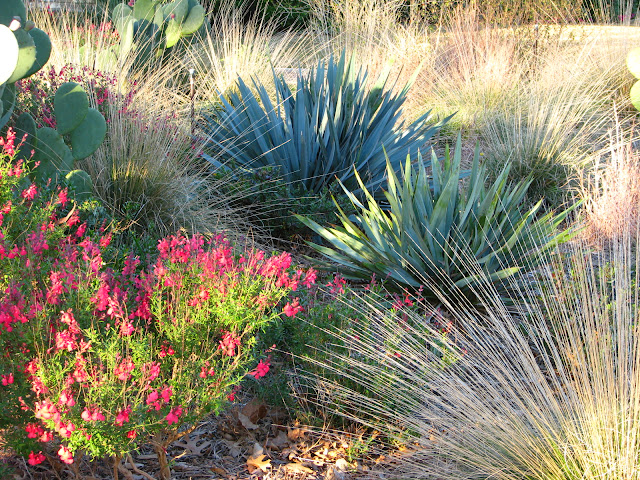
Before: This photo looks more like October or November than March because the autumn sage bloomed so early and the grasses had yet to be cut back.
After: With the grasses cut back, the photo looks a little more springlike.
Before: Another photo that looks like it could have been taken in the fall, but this was March.
After: The pine muhly is no longer apparent, but the agave and four nerve daisies remain.
After: This is the agave from the other side.
Before: Pine muhly dominate the scene. The red berries on the possumhaw holly in the upper left corner will not be around much longer. Cedar waxwing birds are swarming the neighborhood eating all the berries they can find. Right now, their focus is on the yaupon holly berries.
After: The garden appears a little more colorful and alive now that the browns of the grasses are gone.
After: Another shot looking in the direction of the sunrise with more coral autumn sage.
The golden yellow flowers of golden groundsel are as warm as the morning sunrise. This stand gets larger every year and I have a few others started. Once the flowers fade, they develop puffy seedheads similar to dandelions. I have noticed plants popping up in unplanned areas, particularly the decomposed granite pathways. I dug up several little plants and transplanted them to new locations that I would like to see these cheerful flowers in the spring.
The bluebonnets are blooming about three weeks earlier than they did last year. In fact, all of the plants in the garden are ahead of schedule. I am sure it is due to the warm temperatures and few freezes we had over the winter. According to a news broadcast earlier this week, we normally have 33 freezes during the winter. So far, we only had 17 during this winter. As well as I can recall, the temperature never dropped below 30 in any of those freezes.
Around in the backyard, the coral honeysuckle and redbud tree are in bloom.
A closer look at honeysuckle flowers.
This is a first. Buffalo currant comes in male and female plants and my female plant started blooming in late December. For the first time, my plant set a few fruits from those early flowers. It will be interesting to see if they get full size.
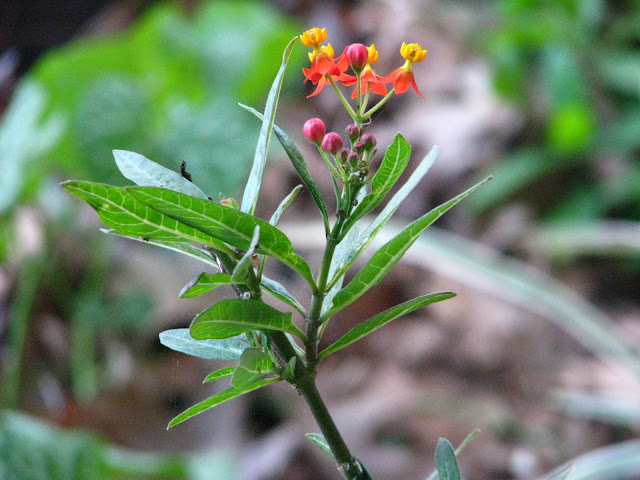
This Mexican milkweed is proof of the warm winter. These plants do not reliably return after normal winters, but this one did not even die back to the ground this winter. In fact, it is blooming in these last days of winter on last year's stems. Officially, spring begins on Sunday, March 20. Spring started in my garden several weeks ago.
Hello! I am still alive. I have not been around the blog much lately because I have been busy with work and other things. Maybe things will settle down soon and I will have the time to post some more information and photos about native plants in my garden. I received an email earlier this week from Emily Neiman at Native American Seed. We corresponded a couple of times in the past. This week she wrote to say that her dad and brother (Bill and Weston) were presenting a Water Conservation Symposium in Flower Mound. Emily said she was looking for "some model native landscape examples" from north Texas and wanted to know if they could include photos from my blog. Of course I agreed, but it was not until just now that I realized that she may have been referring to photos of other native landscapes that I posted on the blog and not necessarily my own landscape. It looks like an interesting event and worth attending if you can. It is this Saturday, February 20 at the Flower Mound Public Library on Broadmoor Lane. See the flyer below for more information.
Before opening Native American Seed in Junction, Bill Neiman had a native plant nursery, Neiman Environments, in Flower Mound. I grew up in nearby in Highland Village and I remember going there with my mom to shop for plants. I don't think we ever came home with any native plants. That was a few years before I was familiar with landscaping with native plants and native plants rarely look good in nursery pot, so we stuck to the traditional landscape plants. I do remember asking Bill Neiman a question about a plant and receiving much more information in return than I expected (or, as a young kid, wanted). I don't remember the plant or the question, but I do remember the passion for plants in his response.
For a preview of the interesting information about native plants that you will hear at the symposium, below is an interview with Bill Neiman on Central Texas Gardener from 2013. After all these years, he has not lost his passion.
In closing, here are a few photos of the native plants and grasses in my garden. I need to time my photo taking a little better to take full advantage of the sunrise and sunset on the grasses and I better do it soon. I will cut all of the plants back to the ground in the next week or two.
The buffalo currant is welcoming the new year with a few out of season flowers. The flowers are most likely due to the crazy weather in 2015. We had a wet spring that filled the near empty lakes. People said the rain broke the drought, but the drought was just hiding. Once the spring rains stopped, we did not get any more until late October and then it was the beginning of another deluge. The year ended with a record rainfall total of over 62 inches. That is almost double our average amount. The year ended with a bang. December 26 was an extremely warm and humid day. When a cold front pushed through that evening, it kicked off at least 12 confirmed tornadoes just to the east of me. The tornadoes caused considerable property damage and took several lives. I was surprised to hear one reporter say that there were 76 confirmed tornadoes in the North Texas area in 2015. Goodbye weather extremes of 2015. Bring on the "average" weather for 2016!